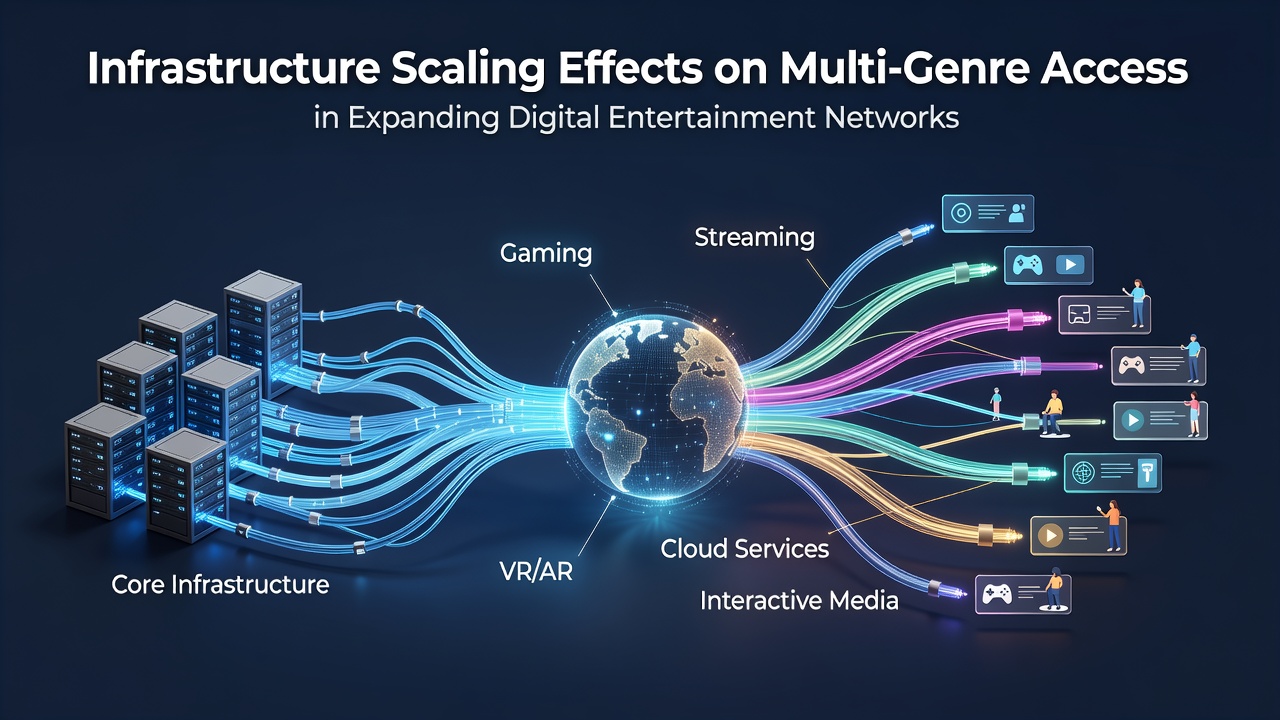
Infrastructure Scaling Effects on Multi-Genre Access in Expanding Digital Entertainment Networks
Observers note that digital entertainment networks continue to expand through upgrades in cloud computing, content delivery networks, and edge processing systems. These changes affect how users reach video, audio, gaming, and interactive content across regions. Data centers now handle larger volumes of simultaneous streams while maintaining latency standards that support multiple genres without interruption. Researchers at academic institutions have documented how scaling infrastructure alters access patterns. Cloud providers allocate additional server capacity during peak periods, which allows platforms to serve high-definition video alongside live gaming sessions. Bandwidth distribution becomes more efficient when operators deploy regional nodes rather than relying on central hubs alone.Core Components of Infrastructure Growth
Network operators expand fiber optic backbones and increase peering agreements between carriers. This setup supports simultaneous delivery of streaming services, music libraries, and virtual reality environments. Edge computing reduces the distance data travels, which benefits time-sensitive genres such as competitive esports and real-time concerts.
Figures from regulatory agencies show continued investment in 5G and fixed wireless access points. In July 2026 several North American carriers completed additional spectrum auctions that expanded capacity for mobile entertainment consumption. These upgrades enable users to switch between on-demand films, podcast libraries, and multiplayer titles without noticeable drops in quality.
Genre-Specific Access Patterns
Video platforms experience direct gains from scaled infrastructure because large file transfers require consistent throughput. Music services benefit from lower latency caching that supports offline synchronization across devices. Interactive gaming networks depend on distributed servers to keep player counts high while preserving frame rates and input response.
Studies conducted by European research consortia indicate that regions with mature edge networks report higher simultaneous usage rates across genres. Users in these areas access sports highlights, narrative podcasts, and social simulation games within the same session windows. Infrastructure density correlates with broader catalog availability rather than restricted selections based on connection quality.

Regional Deployment Trends
Australian communications authorities have tracked infrastructure projects that connect remote communities to national entertainment grids. These initiatives rely on satellite backhaul combined with terrestrial caching points. The approach allows residents to reach both premium video libraries and user-generated content platforms without separate specialized connections.
Industry reports from trade associations document similar patterns in Asian markets where operators scale submarine cable capacity. Increased international bandwidth supports cross-border licensing agreements that expand genre catalogs for local subscribers. Platforms can therefore offer localized audio content alongside international gaming titles without separate infrastructure layers.
Technical Mechanisms Driving Access
Load balancing algorithms distribute requests across available nodes based on current demand. This process prevents any single genre from monopolizing resources during high-traffic events such as major sports broadcasts or game launches. Caching strategies prioritize frequently requested titles while maintaining space for emerging or niche content.
Security protocols scale alongside capacity increases. Encryption overhead remains manageable when hardware acceleration is deployed at the network edge. These measures protect user sessions across video, audio, and interactive services without introducing measurable delays that might limit multi-genre exploration.
Developments Through Mid-2026
By July 2026 several cloud providers announced expanded availability zones in South American markets. These zones support local processing of entertainment workloads and reduce reliance on transoceanic routing. Early measurements indicate improved access consistency for both scripted series and live music events in previously underserved corridors.
Academic analyses continue to examine how scaling decisions influence content diversity. Networks that add capacity evenly across regions tend to show broader genre representation in usage statistics. Concentrated scaling in urban cores produces different patterns where certain interactive formats dominate available bandwidth.
Conclusion
Infrastructure scaling shapes multi-genre access through measurable improvements in capacity, distribution, and latency management. Regulatory filings and industry data confirm that continued expansion of network resources enables platforms to serve video, audio, and gaming content without forced prioritization. Observers expect further regional deployments to extend these effects into additional markets during the remainder of 2026 and beyond.