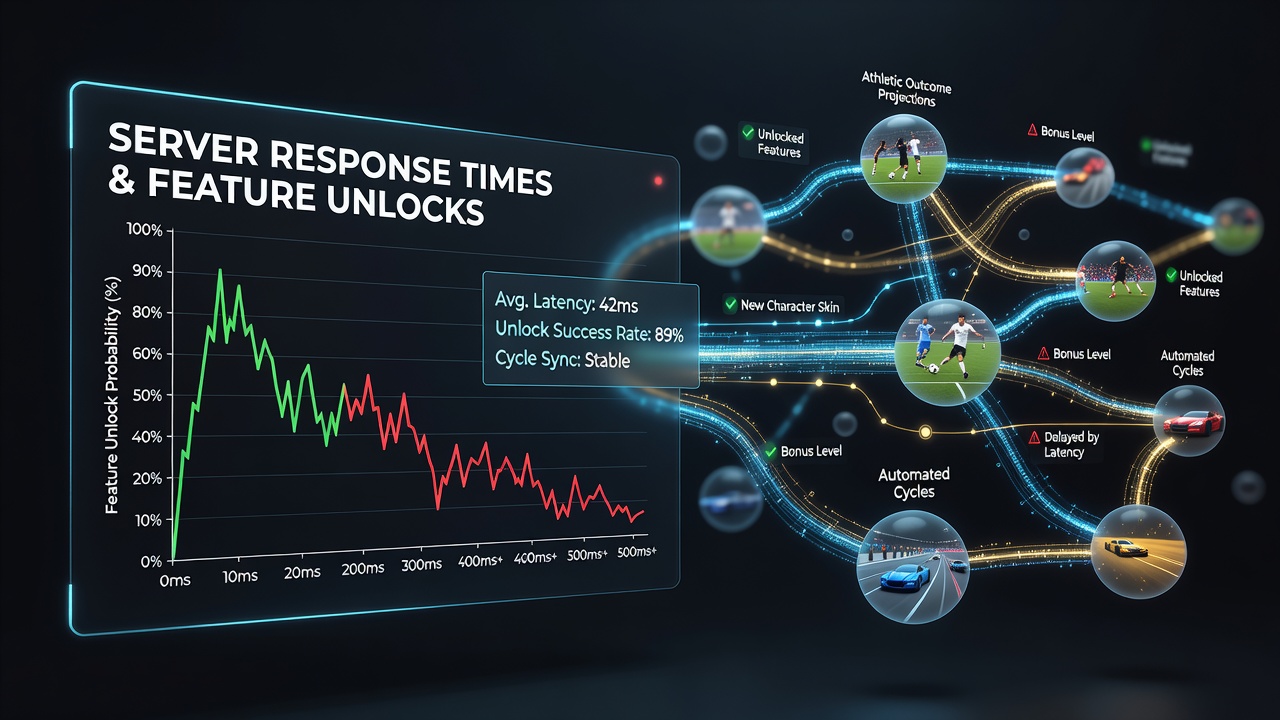
How Server Response Times Influence Feature Unlocks in Multi-Game Ecosystems Blending Automated Cycles with Athletic Outcome Projections
Server response times play a central role in determining when players gain access to additional features within platforms that combine automated reel cycles with athletic outcome projections, and these delays or accelerations directly shape progression through reward layers and betting options.
Platforms operating in this space process requests from slot-style sequences alongside real-time data feeds for sports events, which means any lag in server communication can postpone the activation of elements like bonus multipliers or expanded wager types until the next cycle completes.
Core Technical Interactions
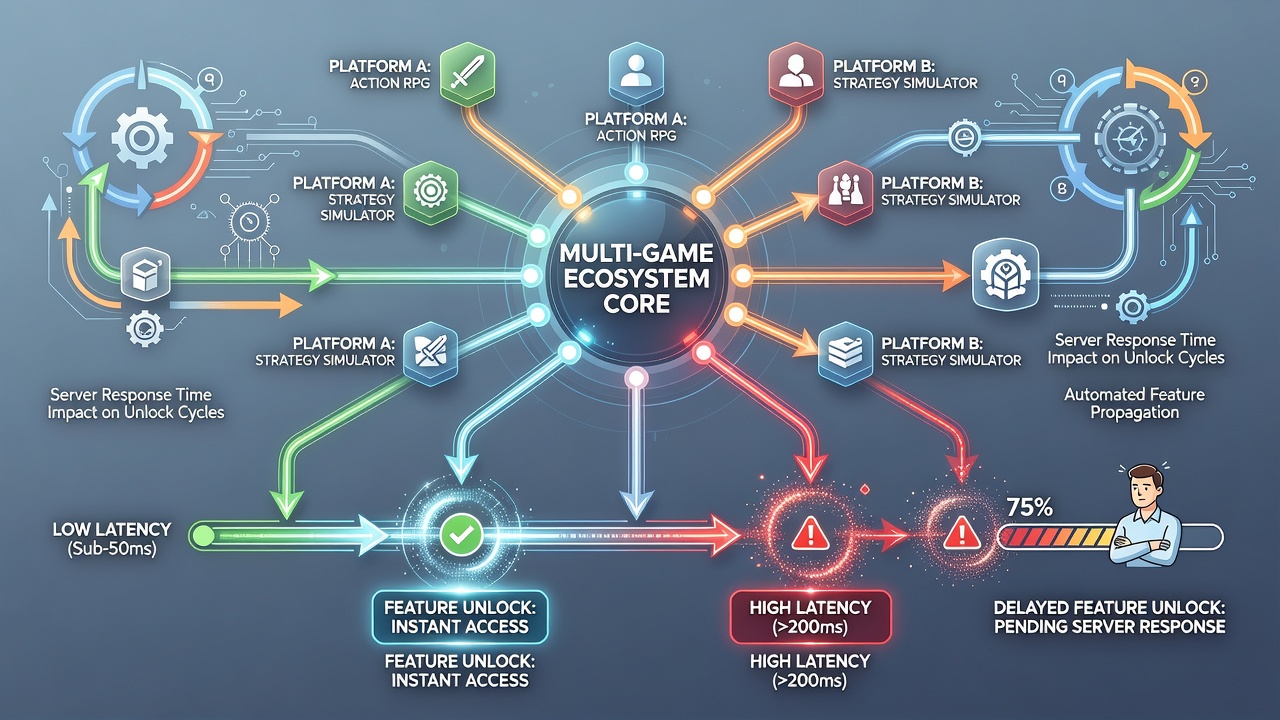
Automated cycles generate outcomes at fixed intervals while athletic projections pull live statistics from external sources, and the server must reconcile these streams before releasing features such as progressive jackpots or in-play adjustment tools. Research from industry technical reviews indicates that response times under 200 milliseconds typically allow seamless unlocks, whereas intervals exceeding 500 milliseconds trigger queued processing that holds features until subsequent data packets arrive.
Observers tracking these systems note that load balancing algorithms distribute requests across regional nodes, yet peak periods during major athletic events create bottlenecks that extend wait times for users attempting to transition between reel sessions and projection-based markets. Data compiled by the Interactive Games and Entertainment Association shows average response variances of 120 to 380 milliseconds depending on concurrent session volume.
Impact on Reward Progression
Feature unlocks often follow threshold mechanics tied to session duration or outcome frequency, and slower server responses interrupt the accumulation of qualifying metrics in both automated and projection modules. Players attempting to reach higher tiers encounter staggered releases where a delayed confirmation from the athletic feed prevents simultaneous activation of reel bonuses and live adjustment options.
One documented case involved a platform that required synchronized data across video reels and basketball projection streams, where response delays of 450 milliseconds postponed tier-three access by an average of 14 minutes during high-traffic windows. Such patterns appear consistently across multiple operator reports, highlighting how network latency compounds with processing queues.
Regional Infrastructure Variations
European operators frequently route traffic through centralized data centers in Frankfurt and Amsterdam, which produces different latency profiles compared with North American setups that rely on distributed edge servers in major metropolitan areas. Figures from the Canadian Gaming Association reveal that platforms using edge caching reduce average unlock delays by 28 percent during simultaneous reel cycles and hockey projection events.
Australian regulators through the Australian Communications and Media Authority have documented similar effects in cross-device environments, where mobile connections introduce additional variability that affects feature availability timelines. These measurements underscore the connection between physical server placement and the speed at which users progress through blended ecosystems.
Developments Entering Mid-2026
By June 2026 several major platforms plan to implement predictive pre-loading routines that anticipate feature requests based on historical session patterns, potentially narrowing response gaps during transitions between automated sequences and athletic projections. Early testing data suggests these routines could stabilize unlock consistency across time zones where event schedules overlap with reel cycle peaks.
Technical updates also include enhanced API protocols that prioritize confirmation packets for projection-based wagers, reducing the instances where users must wait for reel cycle completion before accessing updated athletic lines. Industry presentations scheduled for that period focus on measurable improvements in session continuity under these revised frameworks.
Conclusion
Server response times function as a gatekeeper for feature availability in ecosystems that merge automated reel cycles with athletic outcome projections, and measurable differences in latency directly correlate with the pace at which users access tiered rewards and expanded options. Continued infrastructure refinements scheduled through 2026 aim to address these timing variables while maintaining synchronization across both game types.