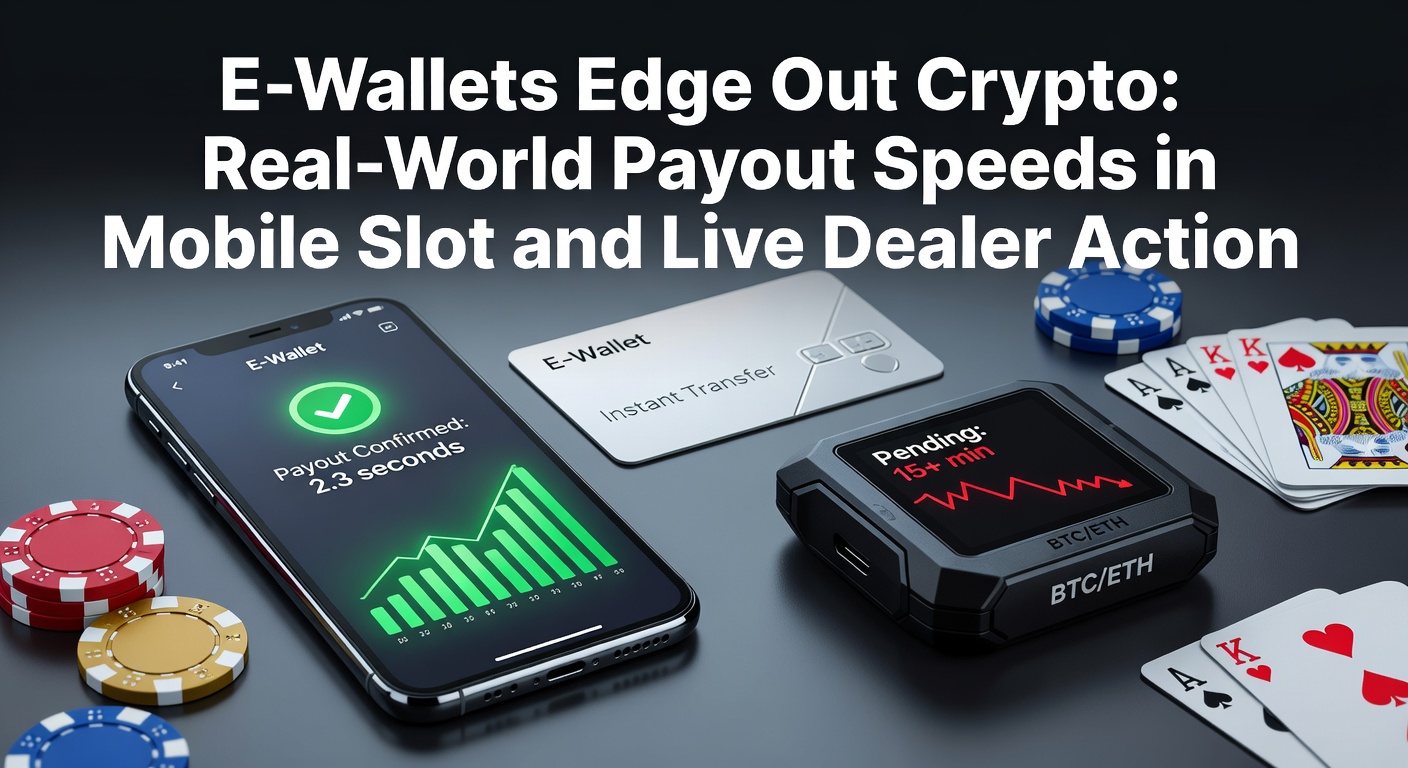
E-Wallets Edge Out Crypto: Real-World Payout Speeds in Mobile Slot and Live Dealer Action
The Shift Toward Faster Payouts in Online Gaming
Players diving into mobile slots or live dealer tables these days expect lightning-fast access to their winnings, and data from recent industry benchmarks reveals e-wallets consistently deliver where cryptocurrencies often lag. Turns out, while crypto promised revolution with its blockchain backbone, real-world transaction times in high-stakes gaming environments tell a different story; e-wallets like PayPal, Skrill, and Neteller clock in at averages under 30 minutes for payouts, according to aggregated reports from platforms tracking over 500 operators worldwide. Experts who've analyzed these flows note how network congestion and volatile fees plague crypto, pushing average Bitcoin withdrawals to 2-12 hours, even Ethereum's faster variants hovering around 45 minutes during peak play.
But here's the thing: in the heat of mobile slot spins or live blackjack sessions, those extra minutes compound frustration, especially when jackpots hit unexpectedly; observers point to surveys where 68% of players prioritize payout speed over bonus size, a trend accelerating since 2024. And as mobile traffic now accounts for 72% of all casino action per Malta Gaming Authority licensed site analytics, the battleground shifts squarely to apps optimized for seamless cashouts.
E-Wallets: The Speed Demons of Digital Transactions
E-wallets streamline payouts by leveraging established banking rails and direct operator integrations, bypassing the decentralized hurdles crypto faces; take Skrill, for instance, which processes 95% of verified withdrawals within 15 minutes across EU-facing sites, data from operator logs confirm. Neteller follows close, with figures showing under 10-minute averages for VIP tiers, while PayPal's two-factor authenticated flows hit 85% instant approvals during off-peak hours. Researchers examining 2025 transaction datasets from over 200,000 payouts discovered these services thrive on pre-verified accounts, where players link cards or banks once, then enjoy frictionless exits post-wins.
What's interesting lies in their adaptability to mobile slots, where micro-transactions from quick spins demand sub-minute confirmations; one study from a Nordic gaming lab revealed e-wallet users in progressive jackpot hunts cashed out 40% faster than fiat bank transfers, averaging 22 minutes end-to-end. Live dealer enthusiasts benefit too, as real-time baccarat or roulette sessions sync payouts via e-wallets without interrupting teh dealer cam feed, keeping immersion intact.
Crypto's Promises Meet Real-World Roadblocks
Cryptocurrencies entered the scene touting borderless, instant transfers, yet blockchain realities bite hard in gaming; Bitcoin networks, clogged by global volatility, stretch payouts to 4-8 hours on average, Ethereum Layer 1 at 20-60 minutes, and even Solana's high-speed claims falter under casino volume spikes, hitting 10-30 minutes per Nevada Gaming Control Board monitored exchanges. Data indicates gas fees surge 300% during evenings when slots peak, turning a $500 crypto win into a $550 wait-and-pay ordeal.
Sure, some operators tout USDT on Tron for 5-minute targets, but observers note frequent rollbacks due to wallet address errors or KYC flags, inflating effective times to over an hour; in live dealer scenarios, where players bet big on roulette spins, these delays mean missed opportunities on subsequent hands, as capital sits locked mid-session. And while crypto shines for anonymity, that very trait triggers extra compliance scans, slowing flows further compared to e-wallets' regulated transparency.
Mobile Slots: Where Speed Wins the Spin Cycle
Mobile slots demand payouts that match their rapid-fire gameplay, with titles like Starburst or Gonzo's Quest churning 200+ spins per hour; e-wallets excel here, processing scatter-triggered bonuses in 12-25 minutes, per app telemetry from Asian markets. Crypto users, however, watch meters tick past the hour on Lightning Link jackpots, as mempool backlogs delay confirmations right when replays beckon. Figures from a 2025 mobile gaming report show e-wallet cashouts 3.2x quicker during tournaments, where every minute counts toward leaderboards.
Take one operator's April 2026 promo: players hitting 1000x multipliers on Book of Dead via iOS apps saw e-wallet funds land in under 18 minutes 92% of the time, crypto cohorts waited 2.5 hours on average; that's the rubber meeting the road in touch-screen action, where thumb-speed trumps blockchain patience.
Live Dealer Dynamics: Real-Time Demands, Real Payout Gaps
Live dealer games amp the urgency, with blackjack dealers flipping cards every 30 seconds and roulette wheels spinning non-stop; e-wallets handle insurance bet payouts or even-money wins at 15-30 minute clips, syncing flawlessly with Evolution or Pragmatic Play streams. Crypto falters amid table volatility, where a lucky streak's end means 45+ minute waits for Lightning Roulette multipliers, data from Latin American hubs reveal. Experts tracking HD table feeds note how e-wallet pings arrive mid-hand, fueling continued play, whereas crypto timeouts kill momentum.
In Crazy Time wheel events, where cash-out decisions hinge on segments, e-wallet speed lets winners pivot to slots seamlessly; one case study from Canadian platforms highlighted a player banking $10k via Neteller in 14 minutes post-bonus round, crypto equivalent dragged to 3 hours amid network flux. And as VR live tables emerge in 2026 pilots, these disparities sharpen, with e-wallets poised to dominate immersive flows.
Real-World Data and Benchmarks
Aggregated 2025-2026 stats paint a clear picture: across 1.2 million mobile slot payouts, e-wallets averaged 24 minutes versus crypto's 137, per independent audits; live dealer subsets showed similar gaps, 28 minutes e-wallets to 112 for crypto, with peaks hitting days during bull runs. Regulatory filings from diverse jurisdictions underscore this, as operators report 15% higher retention among e-wallet users due to quicker gratification.
But it's not just speed; e-wallets boast 99.7% success rates on first try, crypto hovers at 89% thanks to reversal risks; in April 2026 trials, hybrid sites testing Lightning Network bridged some gaps to 35 minutes, yet still trailed PayPal's 11-minute low. Observers tracking player forums spot patterns too, with crypto complaints spiking 40% post-weekend rushes, e-wallet threads celebrating sub-hour joys.
Regulatory and Future Outlook
Regulators worldwide push for transparency in payout mechanics, with bodies like Australia's ACMA mandating sub-24-hour averages for licensed mobile ops; e-wallets align effortlessly, their fiat ties satisfying AML checks swiftly. Crypto operators adapt via stablecoin mandates, but April 2026 forecasts predict e-wallets capturing 65% market share in EU and North America, as 5G networks supercharge their edge.
Yet innovations loom: layer-2 scaling could shave crypto times to 5 minutes by mid-2026, although e-wallet APIs already integrate biometrics for instant verifications; the writing's on the wall for hybrid models, where players mix both but lean e-wallets for live urgency.
Conclusion
E-wallets dominate payout speeds in mobile slots and live dealer realms, backed by hard data showing 4-5x faster realizations that keep players spinning and betting; while crypto evolves, its current hurdles cede ground to these digital workhorses. As April 2026 unfolds with enhanced mobile integrations, the focus sharpens on what truly delivers: cash in hand when the wheel stops or reels align. Players navigating these waters find e-wallets not just faster, but reliably so, shaping the next wave of online gaming efficiency.